

Inspired by Lived Experience
We don't just fund the research. We fight for the system to change.
Pancreatic cancer receives less than 2% of cancer research funding in Australia.* The five-year survival rate has barely moved in decades. That is not just a scientific problem - it is a policy problem, a funding problem, and a systemic problem that requires voices willing to speak up, show up, and refuse to be ignored.
Those voices exist across Australia - patients, carers, and families who have navigated a system that was not built for them. Cherie Dear is one of them. As Paul's wife and Don's daughter, she encountered not just a devastating illness but every gap in the system surrounding it - the research funding shortfalls, the policy failures, the barriers that cost patients time they don't have.
Dare to Hope will always be a voice of the people impacted by pancreatic cancer. We are not afraid to have the "Hard Conversations" because we don't, and never intend to, rely on Government funding.
Dare to Hope exists to bring those experiences together and make them count. We fund the science. And we fight for the conditions that allow that science to matter.
Your experience has power. Join us in keeping their memory alive.
*https://www.canceraustralia.gov.au/publications-and-resources/cancer-australia-publications/key-drivers-funding-trends-cancer-research-2012-2020-final-report
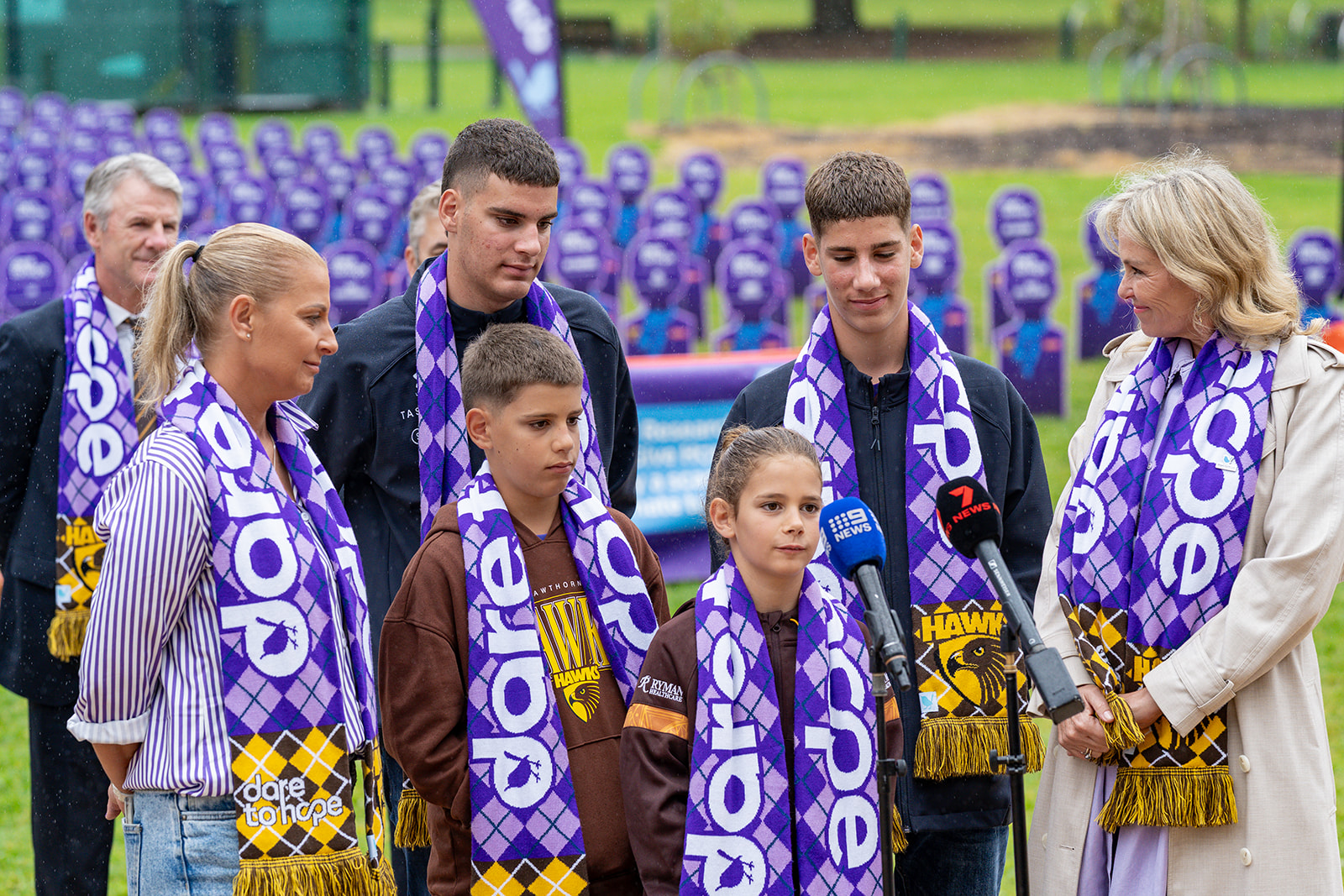
The Barbaro family from Perth with Cherie addressing the media at Dare to Hope 2026
Our Platform
Dare to Hope occupies a unique position in the pancreatic cancer landscape. As the Official Charity Partner of Hawthorn Football Club, with the annual Dare to Hope Match attended by 80,000+ people and broadcast to more than 1.5 million Australians, we have a platform that most patient advocacy organisations cannot access.
We use it deliberately.
It started with Paul sharing his story
The documentary Dare to Hope - The Paul Dear Story is available to watch on SBS on Demand
A year after diagnosis Paul shared his story on Channel 7's The Front Bar
We continue Paul's legacy by using our voices and getting others to share their lived experience about the realities of confronting a pancreatic cancer diagnosis and the issues that matter
Calsher shares Paul's story with the Hawks
The Gut Run on Sunrise
Maya Dear first father daughter draftee
Sharing the Lived Experience of Others
Kelly's Story
Kelly lost her sister to pancreatic cancer. Then came her own diagnosis - breast cancer - which she faced and survived.
Rather than stepping back, Kelly stepped forward - and hasn't stopped since.
She is one of Dare to Hope's most committed and passionate volunteers, both in a practical hands on sense helping manage our Volunteers for the Dare to Hope Match, handling enquiries, packing orders and also by sharing her experience to highlight the difference between her sister's pancreatic cancer diagnosis and her own breast cancer experience.
She is also a Consumer Advocate for the Jreissati Pancreatic Centre at Epworth Hospital - bringing the perspective of someone who has lived inside the system to the people working to improve it.
The Barbaro Family
It took eight visits to emergency before Dave Barbaro was diagnosed with pancreatic cancer. He fought hard for eighteen months. In October 2024, aged just 50, he died - leaving his wife Max and four sons, aged eight to sixteen, in Perth.
That is not a story about a failure of medicine. It is a story about a disease so underfunded and under-recognised that it routinely goes undetected until it is too late.
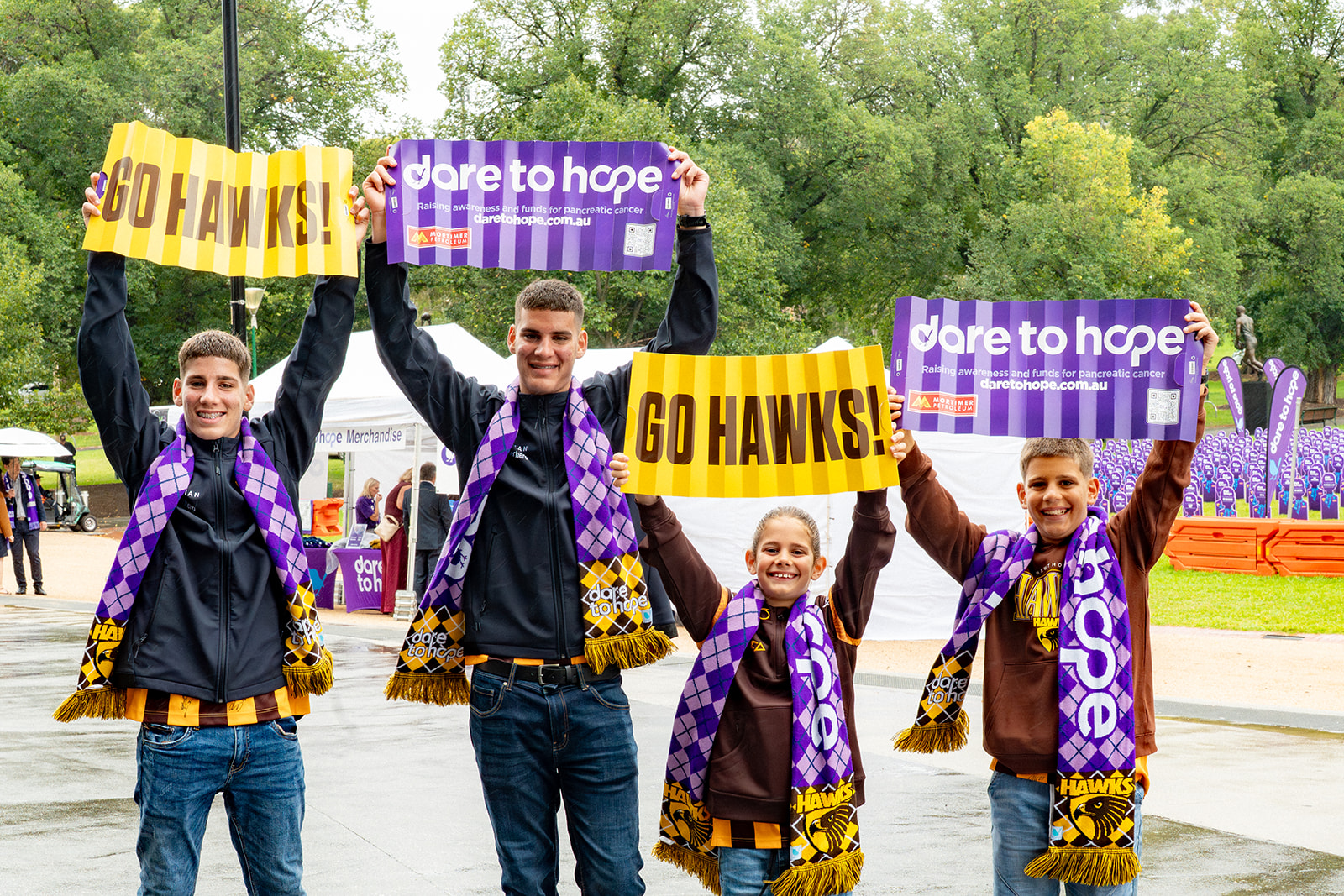
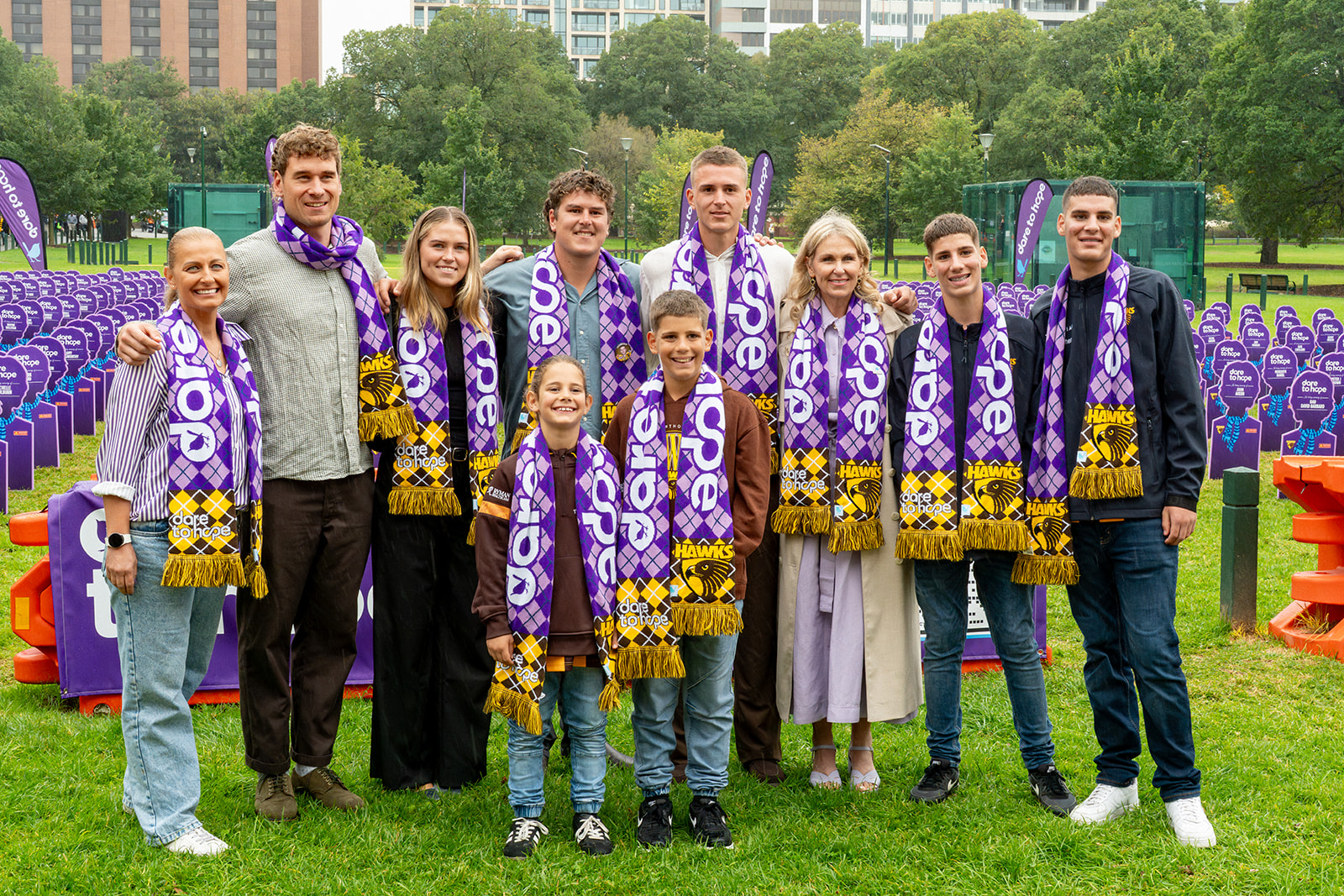
Max and the boys have channelled their grief into action. This season, Dave's four sons are wearing purple football boots and mouthguards - a quiet, powerful gesture inviting a conversation and that says: our dad matters, and so does this disease.
This Easter, the family travelled to Melbourne for the Dare to Hope Match. They saw Dave represented in the Bay of Hope - a sea of personalised silhouettes representing the more than 4,000 Australians lost to pancreatic cancer every year. And they walked in the Hawthorn Guard of Honour, alongside other children who carry the heaviest and most unjust cost of decades of neglect.
The Barbaro boys are doing the hardest thing - turning devastating loss into action, so that other families don't have to face what theirs did.
This is why we advocate. This is who we advocate for.

The Issues we Stand For
Ban genetic discrimination in life insurance
For families carrying a genetic predisposition to pancreatic cancer - including BRCA2 mutations - the decision to undergo genomic testing has carried a brutal catch: a positive result could be used by life insurers to deny cover, increase premiums, or impose unfair conditions. The fear of that consequence has caused people to avoid testing that could save their lives.
Cherie has spoken about this issue publicly and personally - on the ABC's 7.30 Report, on Channel 7 with Maya, Calsher and Jackie Quist. Her voice, rooted in lived experience, helped bring this issue to a mainstream audience.
She has worked alongside Dr Jane Tiller of Monash University's Public Health Genomics section, whose decade-long campaign to end genetic discrimination in life insurance has now succeeded.
Update
On 1 April 2026, the Australian Parliament passed the Treasury Laws Amendment (Genetic Testing Protections in Life Insurance and Other Measures) Act 2025. From 8 October 2026, it will be illegal for life insurers to use genetic test results to deny cover, increase premiums, or impose conditions. This is a landmark reform - and the voices of patients and families who spoke publicly about their experiences were part of making it happen.
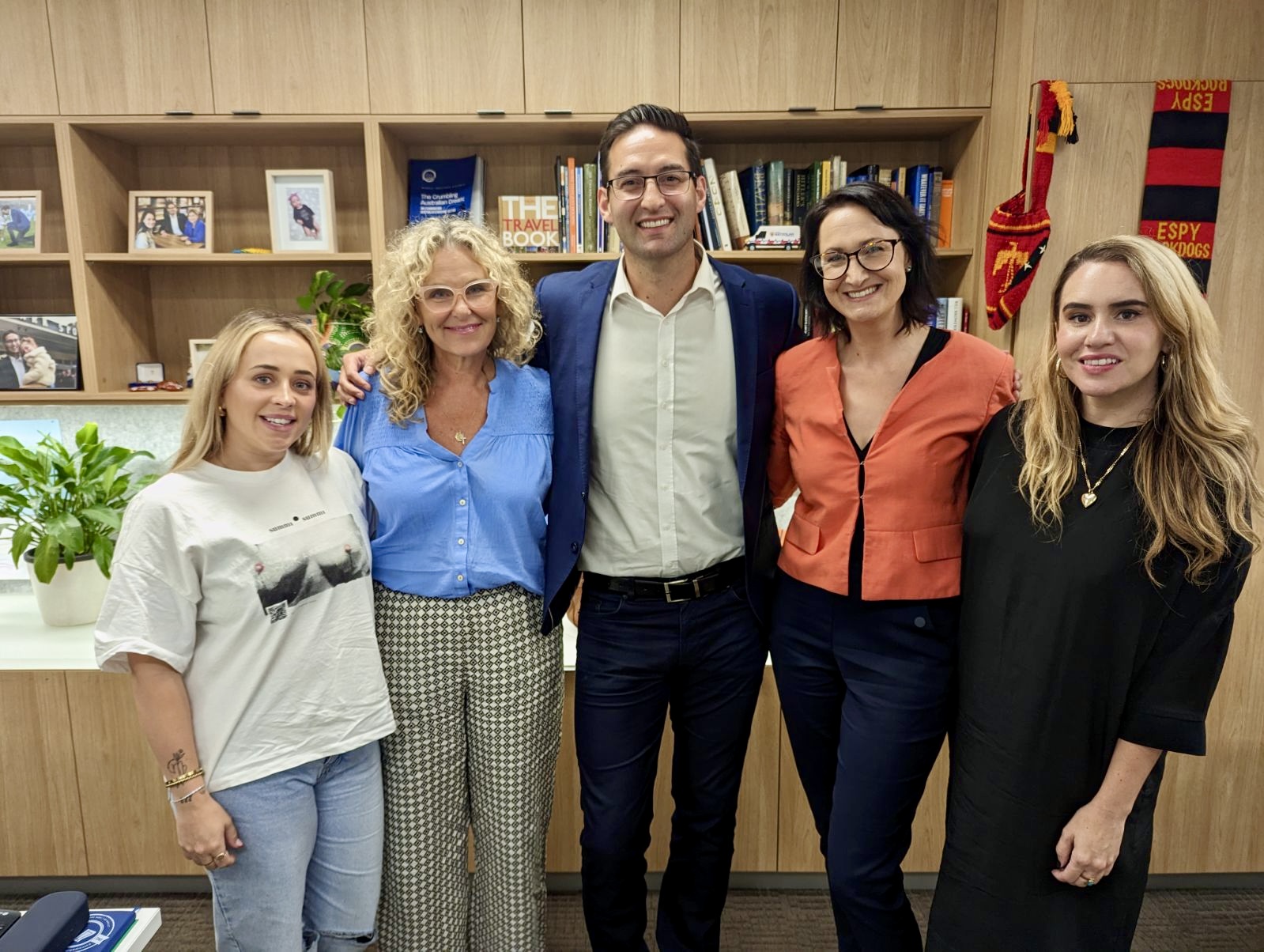
Cherie Dear in a meeting with MP Josh Burns, Prof Jane Tiller and other family members impacted by genetic testing
Access to genomic profiling
Genomic profiling can identify whether a pancreatic cancer patient is likely to respond to targeted treatments — but access to that testing remains inconsistent and inequitable across Australia. Patients who could benefit from precision medicine are missing out, not because the science doesn't exist, but because the pathways to access it are not yet fit for purpose. Dare to Hope is committed to advocating for universal, timely access to genomic profiling for pancreatic cancer patients.
We have supported the work of Professor David Thomas of Omico to ensure Australians diagnosed with advanced and incurable cancers like pancreatic cancer have free access to genomic profiling.
Update
We were pleased to see Omico received $71million in the 2026 Federal Budget, which will support Omico's national precision oncology program PrOSPeCT 2.0 until 2028/2.
Government research funding — the MRFF
June 2026
Australia has just announced a major boost to medical research - a $508.5 million increase in disbursements from the Medical Research Future Fund over four years, alongside the National Health and Medical Research Strategy 2026–2036, lifting annual funding from $650 million towards $1 billion a year by 2030–31.
We welcome this wholeheartedly. It is the most significant commitment to health and medical research in a generation, and its ambition - to lead the world in health outcomes and leave no one behind - is one we share completely. As the new Australian Cancer Research Program takes shape within it, we simply want to make sure pancreatic cancer is part of the picture - recognised in its own right, given its low survival rate and rising burden, with the same dedicated focus that has helped drive progress in other cancers.
Our hope is constructive and our goal is shared: we believe research is the only path to changing the numbers for pancreatic cancer, and this historic investment finally creates the opportunity to do exactly that. We are contributing everything we can - funding early and mid-career researchers and using the reach of our Hawthorn Football Club partnership to keep this disease in the national conversation - and we are working alongside government and the research sector to ensure pancreatic cancer has a seat at the table as this once-in-a-generation program is built.
Supporting early and mid-career researchers
Progress against pancreatic cancer depends on more than funding the right projects - it depends on keeping the right people in the field. Today, that pipeline is under serious strain. Success rates for NHMRC grants now sit at around 8% overall, falling to roughly 4% for early- and mid-career researchers, and varying widely by field, state and institution.
The Australian Academy of Science's 2025 survey of early- and mid-career researchers found career uncertainty to be widespread, with insecure employment and intense competition limiting their ability to build independent research careers. As Dr Shane Huntington OAM, CEO of the Australian Society for Medical Research, has warned, Australia has "a medical research funding drought that will take decades to repair." Without protected time and stable support, we risk losing talented people before their best work is done.
Dare to Hope is responding on both fronts. We fund early and mid-career researchers directly - supporting Dr Matteo Golo at the Garvan Institute and Dr Michael KC Lee at Peter Mac - to help build Australia's research capacity for the future. And because the systemic challenge is bigger than any one charity can solve, we are proud to add our voice to the many organisations across Australia's research community calling on Government to give young researchers greater certainty, security and opportunity to build their careers here.
News Update
Michael Lee and Cherie to appear on Dr Shane Huntington's program Einstein-A-Go-Go on Sunday July 5th
JOIN THE FIGHT
Advocacy works when more people add their voices. If you have been affected by pancreatic cancer - as a patient, a carer, or a family member - your story has power.
If you are willing to share it, we want to hear from you.

